Sage Hartmann · 3 October 2026
Examining Shrinkage Dynamics in Mixed Mineral Substrates During Controlled Drying Processes for Precision Sculpting
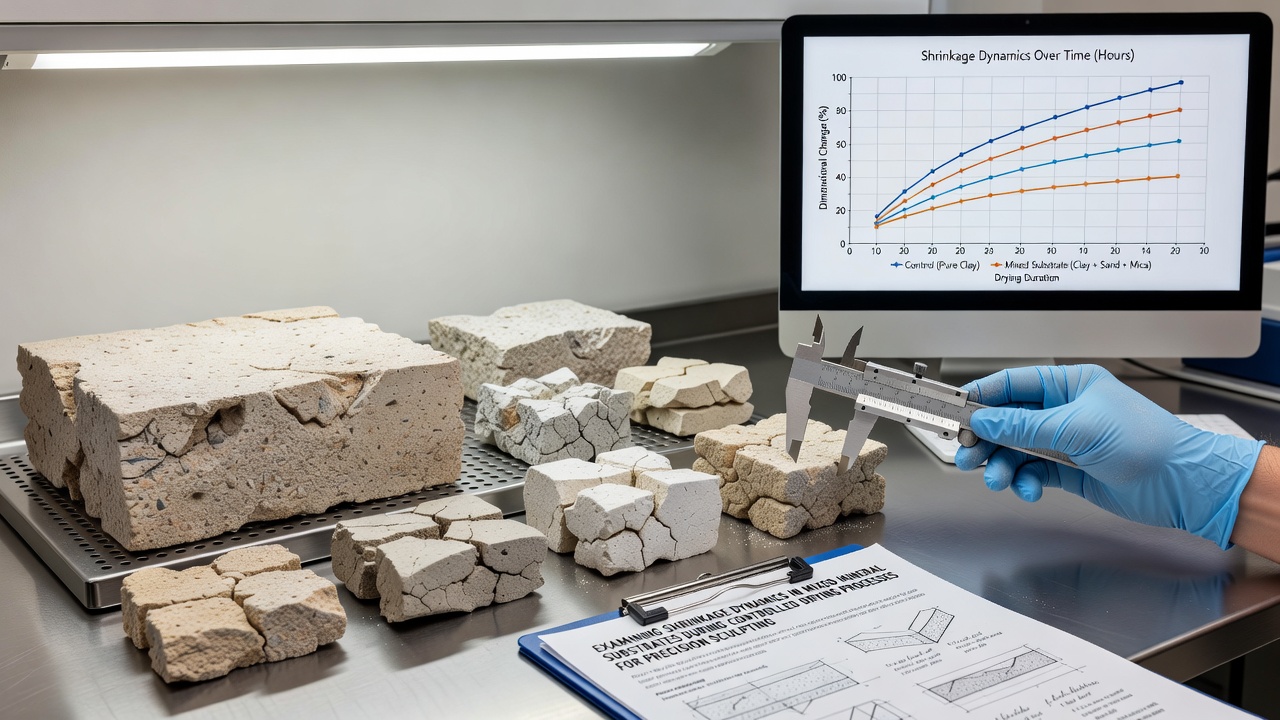
Shrinkage dynamics in mixed mineral substrates play a central role in precision sculpting applications where dimensional accuracy determines final outcomes. Researchers track how combinations of clays, silicates, and other mineral particles respond to moisture loss under regulated conditions, and data from laboratory measurements show consistent patterns of contraction that vary with particle size distribution and binder content. Studies conducted across multiple facilities indicate that uniform drying rates reduce internal stresses while uneven evaporation leads to warping or microfractures in finished pieces.
Mechanisms of Contraction in Composite Mineral Blends
Water removal from mixed mineral substrates triggers several simultaneous processes including capillary tension development, particle rearrangement, and phase transformations at interfaces. Observers note that finer particles tend to pack more densely during early drying stages, which accelerates volume reduction in those zones compared to coarser fractions within the same substrate. Evidence from controlled experiments reveals that mineral composition directly influences the timing and magnitude of shrinkage peaks, with certain silicate additions slowing contraction rates by altering surface chemistry and water retention properties.
Those who monitor real-time dimensional changes during drying report that initial rapid shrinkage often gives way to slower stabilization phases once critical moisture thresholds are crossed. This progression occurs because remaining water becomes bound within smaller pores, limiting further particle movement. Data collected at research centers in Canada and Australia demonstrate that temperature gradients imposed during drying modify these timelines, and higher ambient temperatures accelerate the transition between phases without necessarily increasing total shrinkage volume.
Variables Affecting Drying Behavior
Multiple factors interact to shape shrinkage outcomes in these substrates. Particle shape, mineralogy, initial water content, and drying environment parameters each contribute measurable effects according to systematic testing protocols. Researchers at institutions across the European Union have quantified how increasing the proportion of platy minerals versus equidimensional grains alters contraction anisotropy, producing direction-dependent shrinkage that sculptors must account for during mold design.
Controlled humidity environments allow operators to extend drying duration and thereby distribute shrinkage more evenly across the substrate volume. Findings indicate that incremental humidity reductions at specific intervals prevent surface sealing, which otherwise traps moisture internally and generates differential stresses. In October 2026, presentations at an international materials symposium highlighted updated models that integrate real-time sensor data to predict shrinkage endpoints with greater precision for sculptural workflows.
Techniques for Regulating Shrinkage During Sculpting
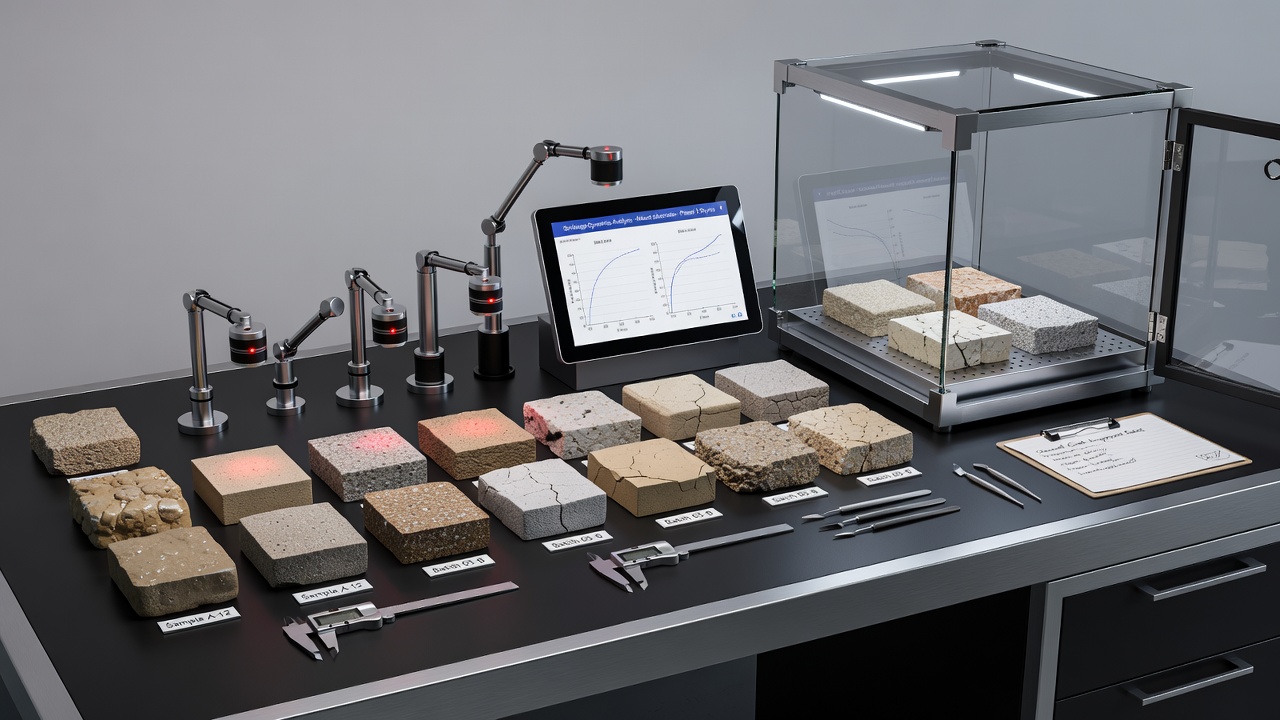
Precision sculpting benefits from drying protocols that maintain consistent environmental conditions throughout the process. Operators employ staged temperature and humidity profiles calibrated to substrate formulations, and these profiles reduce the incidence of defects that compromise fine details. According to reports from the National Institute of Standards and Technology, integration of embedded sensors enables continuous adjustment of airflow and radiant heat to match evolving substrate conditions.
Case examples from professional studios illustrate how pre-drying consolidation steps, such as light pressing or vibration, improve particle packing uniformity and thereby limit subsequent contraction variability. Additional approaches include the incorporation of sacrificial pore-forming additives that create pathways for moisture escape while offsetting some volume loss. These methods require careful calibration because excessive additive levels can weaken structural integrity after firing or curing.
Monitoring and Measurement Approaches
Accurate assessment of shrinkage dynamics relies on non-contact optical systems and strain gauge arrays that capture localized deformation without disturbing the drying substrate. Research groups have developed protocols that correlate surface displacement measurements with internal moisture profiles obtained through dielectric sensing. Such combined datasets allow for validation of predictive models used in production planning.
Facilities in different regions apply standardized test geometries to compare performance across substrate batches, and results feed into databases maintained by materials consortia. This practice supports consistent quality control when switching between mineral sources or adjusting formulations for specific sculpting requirements.
Conclusion
Examination of shrinkage dynamics in mixed mineral substrates during controlled drying continues to inform precision sculpting practices through detailed measurement and process refinement. Data accumulated from varied geographic research efforts provide sculptors and materials specialists with actionable parameters for managing contraction while preserving intended forms. Ongoing refinements in sensing technology and environmental control systems support further improvements in repeatability for these specialized applications.