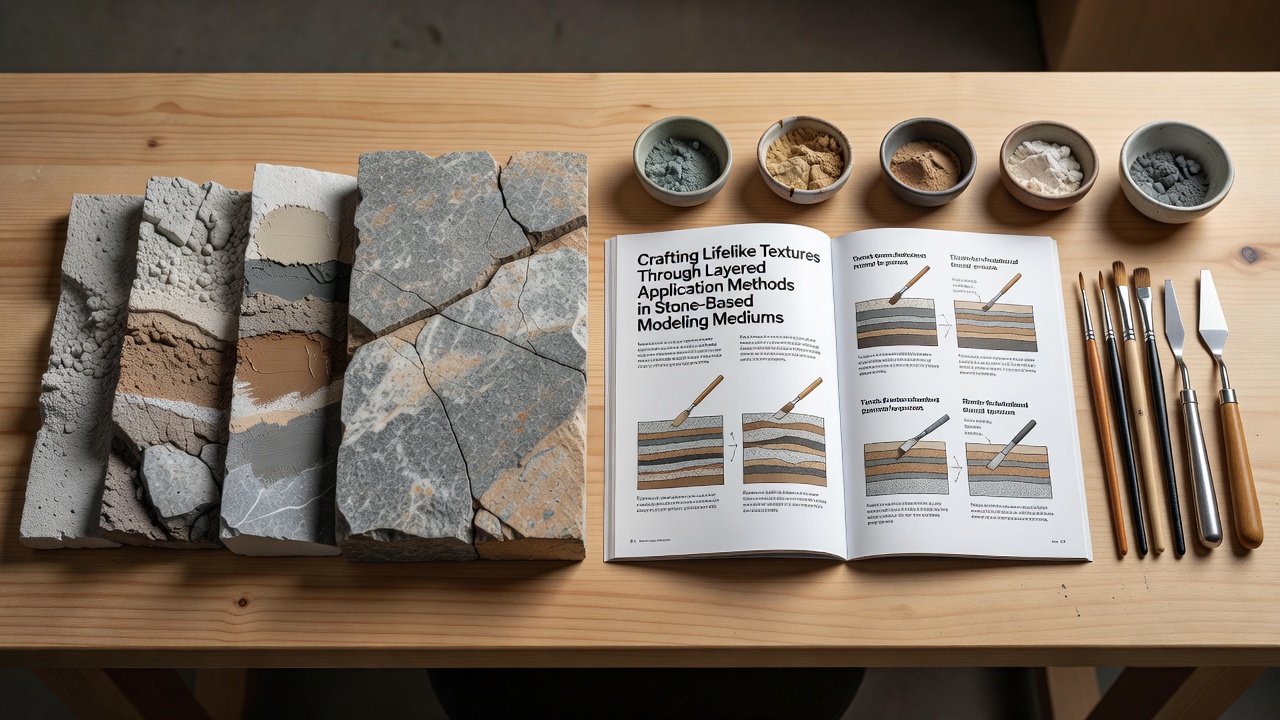
Noah Butler · 5 September 2026
Crafting Lifelike Textures Through Layered Application Methods in Stone-Based Modeling Mediums
Stone-based modeling mediums such as marble composites, limestone pastes, and specialized clays have gained attention in professional workshops because layered application methods allow creators to build depth, variation, and surface realism that single-pass techniques rarely achieve. Researchers at several European art conservation laboratories have documented how successive thin coats of pigmented stone medium adhere better to underlying substrates when each layer cures to a specific hardness before the next is applied, and this process reduces cracking while preserving fine detail over extended periods.
Understanding the Material Properties
Stone-based mediums combine mineral aggregates with binding agents that respond differently to moisture, temperature, and pressure during application, so technicians measure particle size distribution and binder ratios before mixing batches. Data from the Canadian Conservation Institute shows that mediums with 40 to 60 percent calcium carbonate content maintain structural integrity under repeated layering, whereas higher ratios increase brittleness and lower ratios reduce the ability to hold sharp edges. Artists therefore test small samples on identical substrates to establish baseline curing times, which typically range from two to six hours depending on ambient humidity levels.
Layered Application Techniques
Initial base layers establish overall form and block in broad color fields, while subsequent passes introduce micro-variations that mimic natural stone veining, weathering, and mineral inclusions. Practitioners often apply the second layer at a 30-degree angle to the first, allowing light to catch raised edges and create perceived depth without carving. A third or fourth layer may contain finer aggregates or translucent binders that permit underlying colors to show through, producing the optical effects observed in polished marble. Studies published by the University of Melbourne's Centre for Cultural Materials Conservation indicate that alternating opaque and semi-transparent layers improves light diffusion across the surface, which contributes to a more lifelike appearance under gallery lighting conditions.
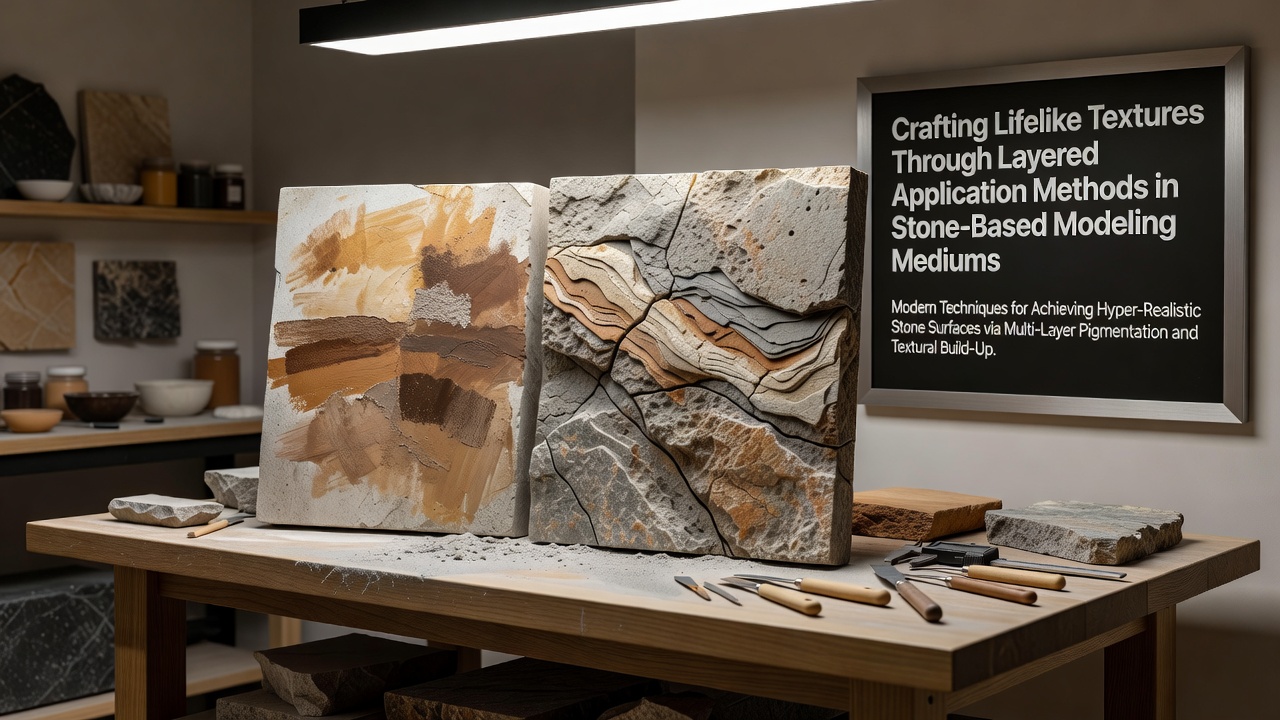
Tools range from silicone brushes and rubber shapers for broad coverage to custom stippling implements made from natural sponge or fine wire mesh for localized texture. Each tool leaves distinct marks that become part of the final surface character, and experienced modelers catalog these marks in reference notebooks so they can repeat successful patterns across multiple projects. Temperature control remains critical because mediums applied above 24 degrees Celsius tend to skin over quickly, trapping air pockets that later expand and disrupt the intended texture.
Case Examples from Professional Practice
One restoration team working on a nineteenth-century facade in Lyon applied eight separate layers of limestone-based medium over three weeks, allowing each coat to reach a leather-hard state before the next application. The resulting surface replicated the original stone's fossil inclusions and subtle color shifts so closely that casual observers could not distinguish the repaired sections from the surrounding historic material. In Australia, sculptors at a public art studio in Melbourne have adopted a similar approach for large-scale outdoor installations, where UV-resistant pigments are concentrated in the outer two layers to maintain color stability without altering the structural properties of the inner mass.
Equipment manufacturers have responded by developing adjustable spray systems that deliver consistent droplet sizes between 50 and 120 microns, enabling uniform coverage on complex geometries. These systems integrate with digital monitoring that records layer thickness in real time, data that later helps technicians replicate successful formulas or diagnose failures. Industry reports from the International Sculpture Center note that workshops adopting such equipment have reduced material waste by approximately 18 percent compared with traditional brush methods.
Current Developments and Future Directions
Workshops scheduled for September 2026 in several North American cities plan to focus on integrating digital scanning with physical layering, allowing artists to map existing stone surfaces and then reproduce their micro-topography through precisely calibrated medium applications. Preliminary trials at one research facility demonstrated that combining laser-scanned data with robotic application arms produced texture fidelity within 0.2 millimeters of the original specimen. Such hybrid approaches remain experimental, yet they build directly on established manual layering principles that have proven reliable across decades of studio practice.
Conclusion
Layered application in stone-based modeling mediums continues to evolve through systematic observation of material behavior, refinement of tools, and integration of measurement technologies. The techniques described rely on measurable properties of aggregates and binders rather than subjective judgment, and ongoing documentation from conservation laboratories and academic programs supplies the data needed to standardize successful methods across different climates and project scales. As equipment and scanning tools advance, practitioners gain additional means to control surface outcomes while preserving the fundamental process of building texture through successive, controlled applications.